


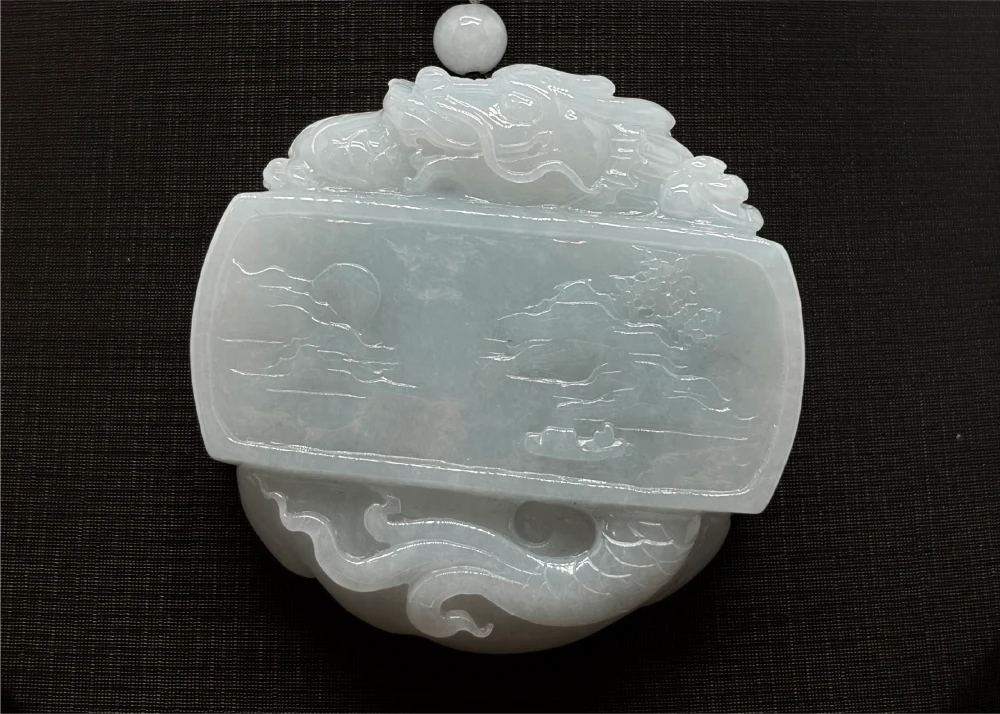
What Is Grade A Jadeite and Why It Matters in Fine Jade Jewellery
When purchasing jadeite jewellery, the term “Grade A jadeite” is frequently used, yet often misunderstood. For serious buyers and collectors, this classification is not merely a label but a critical indicator of authenticity, stability, and long-term value.
Understanding what Grade A jadeite represents helps distinguish natural jadeite from treated alternatives that may appear similar at first glance but differ significantly in composition and durability.
What Defines Grade A Jadeite?
Grade A jadeite refers exclusively to natural jadeite that has not undergone any chemical treatment or artificial enhancement. According to established gemological standards, Grade A jadeite is neither dyed nor impregnated with polymers or resins, preserving its original crystalline structure (GIA, n.d.).
This untreated state is essential because jadeite’s strength, translucency, and longevity depend on its internal structure remaining intact.
How Jadeite Grading Works
In the jade trade, jadeite is generally classified into three categories:
- Grade A jadeite
Natural and untreated jadeite, recognised as the highest classification and the only grade considered suitable for long-term collection and fine jewellery. - Grade B jadeite
Jadeite that has been chemically bleached and impregnated with polymer to improve translucency. While visually appealing initially, the treatment weakens structural integrity over time (Gübelin Gem Lab, 2015). - Grade C jadeite
Jadeite that has been dyed to enhance colour. The colour is not stable and may fade with exposure to light, heat, or chemicals.
Gemological institutions consistently recognise Grade A jadeite as the only category that retains its natural properties and value over time (NGI, n.d.).
Why Treatment Matters
Chemical treatments alter jadeite at a microscopic level. Polymer impregnation used in Grade B jadeite fills internal fissures, creating an artificial improvement in clarity. However, polymers can degrade, discolour, or dry out, leading to loss of translucency and structural weakness (GIA, n.d.).
Grade A jadeite, by contrast, remains stable because its beauty derives from natural formation rather than intervention.
Long-Term Value and Collectability
Collectors and experienced buyers prioritise Grade A jadeite because it:
- Maintains its natural appearance over decades
- Retains structural integrity suitable for daily wear
- Is internationally recognised as a precious stone
- Carries greater long-term desirability in the jade market
As noted by gemological authorities, untreated jadeite is fundamentally different from treated material in both physical stability and market perception (Gübelin Gem Lab, 2015).
Verifying Grade A Jadeite
Independent gemological certification is the most reliable method of verification. Certification reports assess jadeite composition, treatment status, and authenticity through laboratory analysis.
Clear documentation provides transparency and protects buyers from misrepresentation, particularly in high-value purchases.
Closing Thought
Grade A jadeite is valued not for enhancement, but for what nature has already created. Its significance lies in authenticity, integrity, and endurance.
References
- Gemological Institute of America. (n.d.). Jadeite Description and Identification.
- Gübelin Gem Lab. (2015). Jadeite Jade and Treatments.
- Nanyang Gemological Institute. (n.d.). Jadeite Classification and Certification Standards.